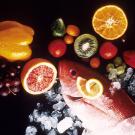
In a review article published in Nature: Science of Food, Professor Raymond Rodriguez and his colleagues explore the relationship between diet and brain health, proposing a framework to understand the body’s “food-brain axis,” the intersection of diet and the formation of new brain cells. Rodriguez’s aim is to provide researchers with a dietary roadmap to help prevent cognitive decline.
How did plants develop photosynthesis? The story is really nothing more than a tale of biological thievery.
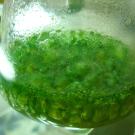
Publishing in The Plant Cell, Lagarias and his colleagues found that a pigment called biliverdin is essential to light-induced chlorophyll production in the alga. This discovery is helping scientists understand why diverse algae retain these pigments, although many lack phytochromes.
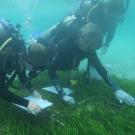
In a study published in Proceedings of the National Academy of Sciences, Professor Susan Williams found that planting multiple species of seagrass accelerates marine ecosystem restoration, improving overall survival and growth of the transplanted seagrasses.
Associate Professor Aldrin Gomes, Department of Neurobiology, Physiology and Behavior in the College of Biological Sciences at UC Davis, studies the underpinnings of heart disease, focusing on the machinery within heart cells responsible for producing the heartbeat. Along with colleagues in the Gomes Lab, he’s searching for molecular clues that will help medical professionals better manage heart disease.
In the United States, around 30 million people live with diabetes. It’s among the top 10 leading causes of death in the country, according to the Centers for Disease Control and Prevention. With no cure, treatment and control remain the only options for diabetes patients.
With funding from the National Institutes of Health and the National Science Foundation, Associate Professor Bruce Draper, Department of Molecular and Cellular Biology, is studying zebrafish (Danio rerio) to learn about the genetics of sexual reproduction in vertebrates. Draper’s research, published in PLOS Genetics with postdoc and Dena Leerberg, ’17 Ph.D., may advance discoveries into the origins of ovarian cancer.
To gain an understanding into how viruses spread, and ultimately evolve, Samuel Díaz-Muñoz, assistant professor of microbiology and molecular genetics in the College of Biological Sciences at the University of California, Davis, explores the hustle and bustle of viruses’ social lives in a new paper published in Cell Host & Microbe.
If you’ve ever tried to untangle a pair of earbuds, you’ll understand how loops and cords can get twisted up. DNA can get tangled in the same way, and in some cases, has to be cut and reconnected to resolve the knots. Now a team of mathematicians, biologists and computer scientists has unraveled how E. coli bacteria can unlink tangled DNA by a local reconnection process. The math behind the research, recently published in Scientific Reports, could have implications far beyond biology.
Assistant Professor Sean Collins, Department of Microbiology and Molecular Genetics, has received a $1.5 million award from the National Institutes of Health to advance the development of “smart” immune cells for therapies to treat cancer and other diseases. The five-year NIH Director’s New Innovator Award aims to provide new insight into how to engineer immune cells to control their recruitment and response to tumors.
While the definitive causes remain unclear, several genetic and environmental factors increase the likelihood of autism spectrum disorder, or ASD, a group of conditions covering a “spectrum” of symptoms, skills and levels of disability.