Each year, the College of Biological Sciences recognizes outstanding members of its faculty for significant efforts in the classroom and laboratory.
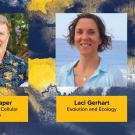
This year, Bruce Draper, a professor in the Department of Molecular and Cellular Biology who studies how germline stem cells are regulated and function in vertebrates, and Laci Gerhart, an assistant professor of teaching in the Department of Evolution and Ecology who teaches the ever-popular “Wild Davis” course, were recognized by their peers for their contributions to the college.
Priya Shah, who holds appointments in the Departments of Microbiology and Molecular Genetics, and the Department of Chemical Engineering, is deciphering the behavior of the Zika virus on animal cells to delve into the possibilities for mitigating the sickness in humans.
"My lab is really interested in how viruses hijack cells and turn them into little, tiny viral factories," said Shah.
UC Davis molecular exercise physiologist Keith Baar spoke with UC Davis Health about how our body responds to physical activity and why intense exercise is better for your heart than walking more steps.
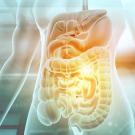
Using a specially designed capsule, researchers can now voyage through the digestive system, collecting new data about digestion and microorganisms. The work by a team including researchers at the University of California, Davis, Stanford University and Envivo Bio Inc., is published May 10 in papers in Nature and Nature Metabolism.
Growing up, Majken Horton (pronounced MY-ken; B.S. ’22) always wanted to know how things worked. She’d study the property she lived on with her parents in Loomis, Calif., and spend summers exploring Alaska with them. Her parents, both UC Davis alumni and salmon biologists, encouraged her to investigate the tiny ecosystems she found and look them up in books to learn their ways.
A new study shows exactly how the gene BRCA2, linked to susceptibility to breast and ovarian cancer, functions to repair damaged DNA. By studying BRCA2 at the level of single molecules, researchers at the University of California, Davis, have generated new insights into the mechanisms of DNA repair and the origins of cancer. The work was published the week of March 27 in the Proceedings of the National Academy of Sciences.
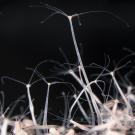
The Greek hero Heracles fought a monster called the Hydra, which grew two new heads for each one he lopped off. Heracles was lucky he wasn’t fighting something with the regenerative ability of the real Hydra, which can re-grow its entire body from a few hundred cells. This simple water animal is helping scientists explore how some animals can regrow missing body parts.
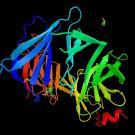
Back-to-back papers in the Dec. 29 issue of Nature Plants report the first complete protein structures for plant respiratory supercomplex I+III₂. Obtaining these structures helps researchers understand basic plant biology, as well as stress responses and how biofuel crops might grow more rapidly.