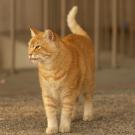
Many mammals, from domestic cats and dogs to giant pandas, use scent to communicate with each other. A new study from the University of California, Davis, shows how domestic cats send signals to each other using odors derived from families of bacteria living in their anal glands. The work was published Nov. 8 in Scientific Reports.
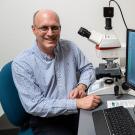
Dan Starr, a cell biologist and professor in the Department of Molecular and Cellular Biology, has been named the new Associate Dean of Research for the College of Biological Sciences. He will step into the role on October 1, 2023.
“I see this position as an opportunity to encourage my colleagues to branch out and expand into new research areas,” said Starr. “Our research portfolio at CBS is already very strong. My goal is to build on our successes and to support future growth in our research programs.”
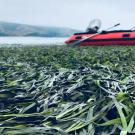
Beds of eelgrass (Zostera marina) form an important habitat in coastal regions throughout the northern hemisphere, crucial to many fish and other species and storing vast amounts of carbon. A new study published July 20 in Nature Plants shows that eelgrass spread around the world much more recently than previously thought, just under a quarter-million years ago. The results have implications for how eelgrass could be affected by a changing climate.
A new study shows exactly how the gene BRCA2, linked to susceptibility to breast and ovarian cancer, functions to repair damaged DNA. By studying BRCA2 at the level of single molecules, researchers at the University of California, Davis, have generated new insights into the mechanisms of DNA repair and the origins of cancer. The work was published the week of March 27 in the Proceedings of the National Academy of Sciences.
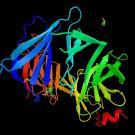
Back-to-back papers in the Dec. 29 issue of Nature Plants report the first complete protein structures for plant respiratory supercomplex I+III₂. Obtaining these structures helps researchers understand basic plant biology, as well as stress responses and how biofuel crops might grow more rapidly.
Plants photosynthesize to survive, and bacteria divide to reproduce, but to accomplish these necessary biological functions, the cells of these organisms employ protein trafficking. More specifically, these functionalities, among many others, rely on the twin-arginine translocation (Tat) pathway, which, when properly functioning, allows for the transportation of proteins across cellular membranes.
The college is very pleased to welcome the newest members of its broad and diverse faculty. With appointments in the Departments of Evolution and Ecology, Plant Biology and Microbiology and Molecular Genetics, the new faculty are poised to make an impact on their respective areas of expertise, and on the classroom and laboratory experience of our students across the college.
Anya Brown
Assistant Professor Department of Evolution and Ecology
The success of E. coli bacteria depends on their ability to multiply very rapidly by dividing into new cells. The bacteria can divide as quickly as they can make an entire new copy of their DNA while minimizing errors. New work from researchers at the University of California, Davis College of Biological Sciences answers a key question about how E. coli fixes damage to DNA in the middle of duplicating it.
This year’s graduate student awards emphasize the importance - and success - of mentoring younger scientists, and demonstrate the UC Davis commitment to collaboration, support and partnership that define interdisciplinary science. Graduate student awards support travel, research and professional development opportunities, and are made possible by generous philanthropic contributions to the college.
CBS Dean’s Mentorship Award
The Dean’s Mentorship Award recognizes graduate students who have demonstrated excellence in the mentorship of undergraduate students.
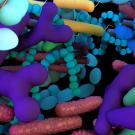
A study led by the University of California, Davis, has found significant differences in gut bacteria between Black and white women, even after accounting for their insulin sensitivity status. The study, published in PLOS ONE, is the first to focus on premenopausal Black and white women and to show such differences.