As a Ph.D. student in the Biochemistry, Molecular, Cellular and Developmental Biology Graduate Group, Yulong Liu investigates the cellular mechanisms underlying female reproductive development in the lab of Associate Professor Bruce Draper. For his research, Liu was recently awarded the UC Davis Dissertation Year Fellowship.
Though classrooms and laboratories may be closed, College of Biological Sciences faculty, students and staff are finding new ways to support one another's educational needs during the coronavirus pandemic. The Aggie Tutorial Farm is a new website that curates useful data analysis tutorials.
Updated 8:30 p.m. March 15 to reflect a lowering of the attendance cap on events, to 50, based on updated guidance from the Centers for Disease Control and Prevention.
To the UC Davis community:
As we reach the end of this very challenging quarter, we want to commend students, faculty and staff for their resilience in the face of the many disruptions brought on by the COVID-19 public health emergency. Our continued monitoring of the situation leads us to even more difficult decisions for spring quarter 2020.
As we continue to monitor the coronavirus (COVID-19) outbreak, we want to ensure our most vulnerable students receive necessary support during this time of crisis. For many, the UC Davis campus is a haven. Community spaces like Aggie Compass and The Pantry provide essential services for students facing housing issues and food insecurity. In a time of crisis, ensuring that these services continue is of utmost importance.
Acting out of an abundance of caution amid the coronavirus (COVID-19) outbreak, we have decided to take additional steps in our efforts to protect our students, faculty and staff, and the community at large, as we all do our part to help contain the spread of the virus.
Plant Biology Graduate Group student Leonardo Jo thought his anxiety was normal, an expected part of the graduate school experience. His peers grappled with similar issues: imposter syndrome, researcher pressures and financial insecurity, to name a few. And they all seemed to suffer in silence at the cost of their own mental health.
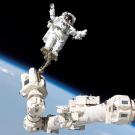
NASA has invested millions of dollars in UC Davis research, working with UC Davis biologists, engineers, physiologists, psychologists and other researchers to study life in space — whether that be studying space itself, the effects of gravity, getting there, staying there or surviving there.