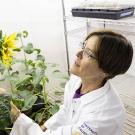
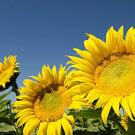
Sunflowers famously turn their faces to follow the sun as it crosses the sky. But how do sunflowers “see” the sun to follow it? New work from plant biologists at the University of California, Davis, published Oct. 31 in PLOS Biology, shows that they use a different, novel mechanism from that previously thought.
“This was a total surprise for us,” said Stacey Harmer, professor of plant biology at UC Davis and senior author on the paper.
Beds of eelgrass (Zostera marina) form an important habitat in coastal regions throughout the northern hemisphere, crucial to many fish and other species and storing vast amounts of carbon. A new study published July 20 in Nature Plants shows that eelgrass spread around the world much more recently than previously thought, just under a quarter-million years ago. The results have implications for how eelgrass could be affected by a changing climate.
An artificial intelligence model has successfully identified coronaviruses capable of infecting humans, out of the thousands of viruses that circulate in wild animals. The model, developed by a team of biologists, mathematicians and physicists at the University of California, Davis, could be used in surveillance for new pandemic threats. The work was published June 8 in Scientific Reports.
Using a specially designed capsule, researchers can now voyage through the digestive system, collecting new data about digestion and microorganisms. The work by a team including researchers at the University of California, Davis, Stanford University and Envivo Bio Inc., is published May 10 in papers in Nature and Nature Metabolism.
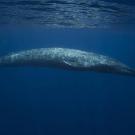
Mammals are an extraordinarily diverse and successful group of animals, from the tiniest pygmy shrew to the mighty blue whale, and including, of course, ourselves. In a special issue of the journal Science published today (April 27), the Zoonomia Consortium shows how comparing the genomes of 240 modern mammals sheds light on mammalian evolution, with implications for conservation and understanding human and animal health.
An internal circadian clock controls the distinctive concentric rings of flowering in sunflowers, maximizing visits from pollinators, a new study from plant biologists at the University of California, Davis, shows. The work was published Jan. 13 in eLife.
A sunflower head is made up of hundreds of tiny florets. Because of the way sunflowers grow, the youngest florets are in the center of the flower face and the most mature at the edges, forming a distinctive spiral pattern from the center to the edge.