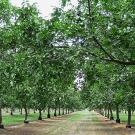
Scientists at the University of California, Davis, have for the first time sequenced the genome of a commercial walnut variety. The information should accelerate the rate of breeding and variety improvement in walnuts and help breeders select for desired traits such as insect and disease resistance, and drought tolerance.
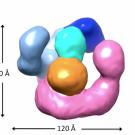
When they think about how cells put together the molecules that make life work, biologists have tended to think of assembly lines: Add A to B, tack on C, and so on. But the reality might be more like a molecular version of a 3-D printer, where a single mechanism assembles the molecule in one go.
Despite decades of warnings about smoking, lung cancer is still the second-most common cancer and the leading cause of death from cancer in the U.S. Patients are often diagnosed only when their disease is already at an advanced stage and hard to treat. Researchers at the West Coast Metabolomics Center at UC Davis are trying to change that, by identifying biomarkers that could be the basis of early tests for lung cancer.
Chloroplasts, better known for taking care of photosynthesis in plant cells, play an unexpected role in responding to infections in plants, researchers at UC Davis and the University of Delaware have found.
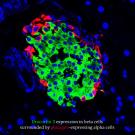
Sometimes, listening in on a conversation can tell you a lot. For Mark Huising, an assistant professor in the Department of Neurobiology, Physiology and Behavior at the UC Davis College of Biological Sciences, that crosstalk is between the cells that control your body’s response to sugar, and understanding the conversation can help us understand, and perhaps ultimately treat, diabetes.
Do microbes grow differently on the International Space Station than they do on Earth? Results from the growth of microbes collected by citizen scientists in Project MERCCURI indicate that most behave similarly in both places.
Ocean ecosystems that experience rapid upheaval because of climate change can take thousands of years to recover, according to an examination of fossilized ocean fauna on the seafloor by the University of California, Davis.
Human babies appear to need more of a nutritional boost from breast-milk proteins than do infants of one of their closest primate relatives, suggests a study comparing human milk with the milk of rhesus macaque monkeys.
Efforts to bring populations of endangered white abalone back from the brink of extinction through captive breeding appear to be working, according to scientists at the UC Davis Bodega Marine Laboratory.
Seafloor sediment cores reveal abrupt, extensive loss of oxygen in the ocean when ice sheets melted roughly 10,000-17,000 years ago, according to a study from the University of California, Davis. The findings provide insight into similar changes observed in the ocean today.