Yasuhisa Munakata, a postdoctoral fellow in the College of Biological Sciences, has received a grant to study how egg cells in the ovary change over time. “Our goal is to understand female reproductive aging, and why fertility rapidly declines starting in the mid-30s,” says Satoshi Namekawa, a professor of Microbiology and Molecular Genetics, in whose lab Munakata works.
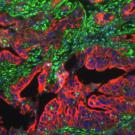
Pancreatic cancer is the third leading cause of cancer-related deaths in the United States and only 12% of patients survive five years after being diagnosed. Severe pancreatic cancer is associated with metastasis, and it is this spread of secondary tumors that usually causes death, but little is known about the molecular mechanisms that drive metastasis.
Female zebrafish (Danio rerio) have an unusual tendency: if their egg cells are damaged, they can turn into males. Bruce Draper, a professor in the Department of Molecular and Cellular Biology (MCB) and Florence Marlow, a professor at the Icahn School of Medicine at Mount Sinai, have discovered that immune cells called macrophages play a key role in this process. These cells normally keep things “tidy” by removing dead or damaged cells – but in zebrafish they can also remodel the ovaries into sperm-producing testes. “It’s a pretty interesting and novel idea,” says Draper.
When it comes to brain anatomy, the thalamus occupies a humble position. It sits at the top of our brainstem — an apparent vestige of our reptilian past — and is dwarfed by the massive, wrinkled cerebral cortex, which sits above it. The cortex is often credited as the throne of human intellect. But a team of researchers across the country, with UC Davis led by W. Martin Usrey, sees the thalamus as a critical coordinator of our thoughts and perceptions – and pivotal in human disease.
Many mammals, from domestic cats and dogs to giant pandas, use scent to communicate with each other. A new study from the University of California, Davis, shows how domestic cats send signals to each other using odors derived from families of bacteria living in their anal glands. The work was published Nov. 8 in Scientific Reports.
Neutrophils, the primary foot soldiers of the immune system, swarm to sites of infection and inflammation by following breadcrumb pathways made up of signaling molecules. But the human body is a complex place, and neutrophils are often simultaneously bombarded with multiple signals, some of which are more important than others. For example, signals of infection or tissue damage require more urgent attention than signals produced by other immune cells.
Christina Kim, a faculty member in the Center for Neuroscience and an assistant professor in the UC Davis Department of Neurology, has been selected as a 2023 NIH Director’s New Innovator Award recipient. The award, announced last month, is part of the NIH Common Fund’s High-Risk, High-Reward Research program.
Scientists have long known that chloroplasts help plants turn the sun’s energy into food, but a new study, led by researchers in the Department of Plant Biology, shows that they’re also essential for plant immunity to viral and bacterial pathogens.
Chloroplasts are generally spherical, but a small percentage of them change their shape and send out tube-like projections called “stromules.” First observed over a century ago, the biological function of stromules has remained enigmatic.
Cancer often starts with the reshuffling of DNA—akin to scrambling the pages of a dictionary. Exactly how this happens has long been a mystery. But researchers in the UC Davis College of Biological Sciences have now arrived at one promising explanation.
The problem seems to happen at a critical moment: when the cell is fixing a broken string of DNA. This repair process, called homologous recombination, can go awry, says Wolf-Dietrich Heyer, a Distinguished Professor and chair in the Department of Microbiology and Molecular Genetics.
For most people, contracting Zika virus, a flavivirus carried by mosquitos, is akin to getting any mildly inconvenient virus.
You might get a fever and a rash, and it's gone in a few days. But for pregnant people, there is a roughly 4% chance that a bite from a mosquito with Zika virus could have life-altering effects on developing fetuses in the form of microcephaly, a neurological condition that indicates an under-developed brain.