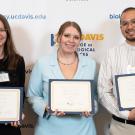
Each year the college recognizes the importance of mentorship in the continued growth of both the undergraduate and graduate communities by awarding CBS Dean’s Mentorship Awards to graduate students. Funded by contributions to the CBS Dean’s Circle, the awards are open by faculty nomination to graduate students who have played a significant role in the growth and development of the younger generation of scientists.
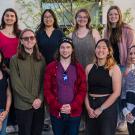
The UC Davis College of Biological Sciences champions Diversity, Equity, Inclusion, and Justice (DEIJ) through the Graduate Student DEIJ Leader Fellowship program. Now in its second year, the program empowers enterprising graduate students committed to enhancing DEIJ within the CBS community by supporting projects aimed at fostering a more inclusive academic environment.
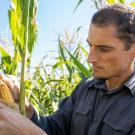
Maize is one of the world’s most widely grown crops. It is used for both human and animal foods and holds great cultural significance, especially for indigenous peoples in the Americas. Yet despite its importance, the origins of the grain have been hotly debated for more than a century. Now new research, published Dec. 1 in Science, shows that all modern maize descends from a hybrid created just over 5000 years ago in central Mexico, thousands of years after the plant was first domesticated.
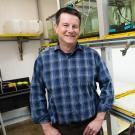
Jay Stachowicz, a professor in the Department of Evolution and Ecology, has been named the interim director of the Coastal and Marine Sciences Institute (CMSI). Stachowicz succeeds the institute’s founding director, Rick Grosberg, a distinguished professor emeritus of evolution and ecology who retired from the university earlier this year.
Many mammals, from domestic cats and dogs to giant pandas, use scent to communicate with each other. A new study from the University of California, Davis, shows how domestic cats send signals to each other using odors derived from families of bacteria living in their anal glands. The work was published Nov. 8 in Scientific Reports.
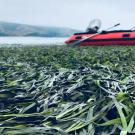
Beds of eelgrass (Zostera marina) form an important habitat in coastal regions throughout the northern hemisphere, crucial to many fish and other species and storing vast amounts of carbon. A new study published July 20 in Nature Plants shows that eelgrass spread around the world much more recently than previously thought, just under a quarter-million years ago. The results have implications for how eelgrass could be affected by a changing climate.
Peter Wainwright, a Distinguished Professor and Chair of the Department of Evolution and Ecology, has been honored with the 2023 Joseph S. Nelson Lifetime Achievement Award in Ichthyology. Conferred by the American Society of Ichthyologists and Herpetologists (ASIH), the award recognizes exceptional contributions to the realm of fish biology and aquatic ecosystems.
Wainwright received the award in honor of a distinguished career marked by groundbreaking research, transformative education and dedicated service to his field.
Elena Suglia, a soon-to-graduate Ph.D. candidate in the Population Biology Graduate Group, has spent her time at Davis tackling the “inextricably intertwined issues” of environmental protection, environmental justice, and equity.
In recognition of her leadership in working at the intersection of science and public policy, Suglia was awarded the 2023 Emerging Public Policy Leadership Award from the American Institute of Biological Sciences.
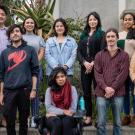
In the College of Biological Sciences, principles of diversity, equity and inclusion are guiding principles. As such, an array of special DEI-related programs led by graduate students, each of whom was awarded a Graduate DEIJ Leader Fellowship for the 2022-23 academic year, will culminate in an open house event highlighting their achievements from 1:00-3:00pm on June 8, in Walker Hall.