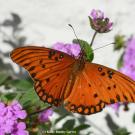
Utilizing nearly 45 years of butterfly population field data, a new study published in Climate Change Responses reveals how recent record-setting temperatures and drought conditions affected butterfly populations at various elevations in Northern California. And the results are surprising.
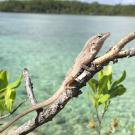
Tiny lizards in the Bahamas are providing scientists with new insights into evolution in isolated environments. In a new paper in the journal Science, biologists analyzed the risk-taking actions of the brown anole (Anolis sagrei) to better understand how animal behavior is influenced by natural selection.
There’s a lot to see on the UC Davis campus, and Department of Evolution and Ecology faculty Sharon Strauss and Laci Gerhart-Barley designed “Wild Davis” with a simple goal: to connect new students, regardless of academic discipline, with the plants and animals that also call UC Davis home.
With help from more than 10,000 citizen scientists, University of California researchers have taken a step forward in understanding how factors such as diet, antibiotics and mental health relate to the microbes living in the human gut.
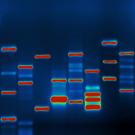
It’s been widely reported that investigators got a break in the East Area Rapist/Golden State Killer case when they uploaded a DNA profile to a genealogy database, GEDmatch, and identified relatives of the suspect, Joseph DeAngelo. Did they get lucky, or did they have a good chance of finding him? UC Davis population biologists Graham Coop and M. D. “Doc” Edge have written a nice explainer of the science behind this search.
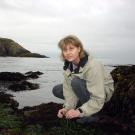
Faculty, staff and students gathered at the UC Davis Bodega Marine Laboratory today not for their weekly seminar, but to remember their colleague Susan Williams who died in a car crash Tuesday (April 24) while en route to the Davis campus to teach.
An international consortium of scientists is proposing what is arguably the most ambitious project in the history of biology: sequencing the DNA of all known eukaryotic species on Earth.
Seagrass carpets the seafloor creating a unique and vital ecosystem in shallow marine environments. Sea turtles graze on seagrass leaves while smaller organisms seek refuge in the green fields but, on the microscopic level, seagrass is also home to microbial communities. Such microbes compose the seagrass microbiome and potentially play a role in seagrass ecology.
Grace Ha is a Ph.D. candidate in marine ecology at UC Davis, where her thesis focuses on the analysis of camouflage in marine ecosystems. She is participating in the Leaders for the Future program, a five-month cross-campus collaboration between the Office of Research, the Career Center, GradPathways (Graduate Studies) and our institute. She recently participated in the Food, Ag + Health Entrepreneurship Academy as our 2018 Harkins Fellow.
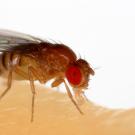
In a study appearing in Current Biology, Michael Turelli, distinguished professor of genetics in the Department of Evolution and Ecology, and his colleagues traced the spread of closely related Wolbachia across Drosophila fly species. They found that while the flies evolutionarily diverged tens of millions of years ago, their Wolbachia bacteria diverged only tens of thousands of years ago.