Kristin Aquilino, an assistant project scientist at the UC Davis Bodega Marine Laboratory, discusses her journey to UC Davis and her drive to restore white abalone.
Funders gathered today in London to officially launch the Earth BioGenome Project, a global effort to sequence the genetic code of all the planet’s eukaryotes — some 1.5 million known species, including all plants, animals, protozoa and fungi.
Rachael Bay and colleagues will investigate how the Willow Flycatcher deals with rapid environmental change, with the goal of linking physiology, morphology and genomics to create a comprehensive map of the species’ adaptation.
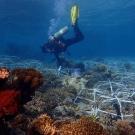
Even after being severely damaged by blast fishing and coral mining, coral reefs can be rehabilitated over large scales. In a new study, researchers installed 11,000 small, hexagonal structures called “spiders” across 5 acres of reef in the center of Indonesia’s Coral Triangle.
Since joining the UC Davis faculty in 2004, Eric Sanford has worked closely with shellfish industry businesses to promote sustainable aquaculture for ecologically and economically important coastal species.
Longnose Butterflyfish hunt along the sea floor. New research shows how they use coral reefs and the tradeoff between physical defense and predator avoidance.
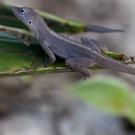
A new study in the journal Nature gives a graphic demonstration of Anole lizards living on islands in the Caribbean and how they survived – or not – two violent hurricanes in 2017.
Ph.D. grad Allison Injaian studies the effects of traffic noise on tree swallows. In the fall, she'll continue her research at the Cornell University Lab of Ornithology.