Professor Graham Coop and postdoctoral researcher Michael “Doc” Edge, both of the Department of Evolution and Ecology, warn that these “direct to consumer” DNA testing services could be vulnerable to a sort of genetic hacking.
In a study published today in the journal Scientific Reports, scientists from the University of California, Davis, and the California Department of Fish and Wildlife use two decades of kelp ecosystem monitoring data to chronicle the catastrophic shift in 2014 from a robust bull kelp forest to a barren of purple sea urchins.
Every summer, the UC Davis Bodega Marine Laboratory offers summer classes to undergraduate students interested in coastal and marine sciences. Marine and Coastal Sciences student Tessa Filipczyk spent the summer taking classes and conducting her own research on the effects of clamming.
As director of the Coastal and Marine Sciences Institute, Richard Grosberg oversees an interdisciplinary body that includes membership from the College of Biological Sciences, the College of Agricultural and Environmental Sciences, the College of Letters and Science, the College of Engineering, the School of Law, the School of Veterinary Medicine and the Graduate School of Management.
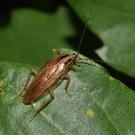
Sexual determination and differentiation work in myriad ways across the animal kingdom. In vertebrates, like mammals and fish, sexual determination leads to the development of either ovaries or testis. These organs then secrete hormones that go on to govern the sexual development of the rest of the organism’s body. Insects are a completely different beast.
The genomes of wild animals can help us understand how they have adapted to unique situations, give insight into their evolution and help in efforts to protect or restore endangered species. Two examples are recently published chromosome-scale genome assemblies for the Masai giraffe and the gemsbok.
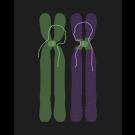
Geneticists exploring the dark heart of the human genome have discovered big chunks of Neanderthal and other ancient DNA. The results open new ways to study both how chromosomes behave during cell division and how they have changed during human evolution.
In a new study, UC Davis postdoctoral researcher Didem Sarikaya and her colleagues analyzed egg-laying strategies of 65 different Hawaiian Drosophila species and found that egg-laying capacities diverged in response to their unique environments, which directly affected the number of cells involved in each species’ ovarian development.
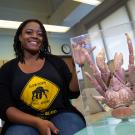
Population Biology Ph.D. student Victoria Morgan uses genetics to understand how land crabs adapted to living on land. Her research has taken her all the way to Christmas Island, home to the annual Christmas lsland Red Crab migration.