Evolution & Ecology

Science Storytelling Through a Camera Lens

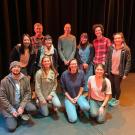
From Chilean tidepools to the High Sierra, 12 UC Davis graduate students traveled the world this summer in search of answers to ecology’s most pressing questions.

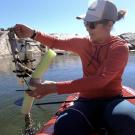
In the blazing 100-degree Texas sun, Jon Aguiñaga waded through polluted waters on the side of freeways to capture tiny fish, which he then ran experiments on in the garage of an Airbnb. Marissa Sandoval flew to Florida to extract sexual-selection perfumes from the green inflorescent legs of orchid bees. MJ Farruggia trekked more than 1,000 miles in the Sierra backcountry for 240 days and is “still not tired of it.”


Forty Years of Science in 40 Minutes

He quipped that he was "going to cover 40 years of science in 40 minutes."

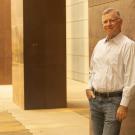
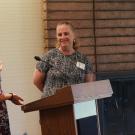
And UC Davis distinguished professor emeritus Harris Lewin, renowned for his research in comparative mammalian genomics and immunogenetics, did just that when he delivered the inaugural UC Davis New Emeriti Distinguished Lecture on “From Chickens to Cows to Everything: Perspectives from 40 Years in Science."

Hibernating Corals and the Microbiomes That Sustain Them

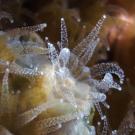
As winter approaches, many species of animals — from bears and squirrels to parasitic wasps and a few lucky humans — hunker down for some needed rest. The northern star coral (Astrangia poculata) also enters a hibernating state of dormancy, or quiescence, during this time. But what happens to its microbiome while it’s sleeping?

Corals Saving Corals

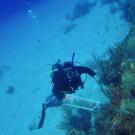
Under the right living arrangement, disease-resistant corals can help “rescue” corals that are more vulnerable to disease, found a study from the University of California, Davis, that monitored a disease outbreak at a coral nursery in Little Cayman, Cayman Islands. 

Biodiversity Genomics Europe Aims to Reverse Biodiversity Loss

UC Davis is a collaborating partner in a new European effort to use DNA data to characterize and conserve life on Earth. The Biodiversity Genomics Europe consortium, launched Sept. 26, is affiliated with the Earth BioGenome Project, which has its administrative headquarters at UC Davis. Harris Lewin, distinguished professor of evolution and ecology at UC Davis, chairs the EBP Working Group.

Rachael Bay Lab Wins Top Safety Award

When you’re experimenting with water, electricity and live animals, a lot can go wrong if you’re not careful. And no one knows more about that than Rachael Bay and her research team.

They study human-induced changes in the environment and evolutionary processes — things like climate change, coral bleaching and bird migration. And when you’re doing that kind of work — handling chloroform one day and blood samples the next — you want to make sure you’re not cutting corners.