Can the bend of a banana give us insight into cancer? What does the shape of a rice grain have to do with infertility? The proteins that give plants their shape and structure are also involved in human disease. A team led by researchers at the University of California, Davis, has mapped out the structure of a key player, augmin, in exhaustive detail.
There are many ways to communicate with prospective romantic partners: If you are a Japanese scarab beetle, it’s a matter of distinguishing left from right. New work from U.S. and Chinese scientists, published this week in Proceedings of the National Academy of Sciences, shows how these beetles use mirror-image pheromones to find a mate. The work could lead to better monitoring and control of significant agricultural pests.
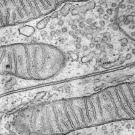
Inside our cells are tiny engines that supply the energy to sustain life. These protein machines essentially burn our food – producing CO2 and harnessing the energy that is released to sustain growth, movement and even thought.
Each year, roughly 1.6 million people worldwide are born with genetic diseases that disrupt these tiny cellular engines – making life difficult.
“Mutations in these protein complexes are really devastating, and often lethal,” says James Letts, an associate professor of molecular and cellular biology.
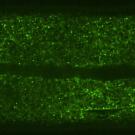
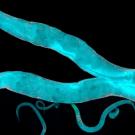
In a new study published in Science Advances on September 10, a team of UC Davis researchers tracked the movement of fluorescent particles inside the cells of microscopic worms, providing unprecedented insights into cellular crowding in a multicellular animal. They found that the cytoplasm inside the worms was significantly more crowded and compartmentalized than in single-celled yeast or mammalian tissue culture cells, which are more commonly used to gauge internal cellular dynamics.
Although teaching is a core part of being a professor, most academics learn how to teach on the job. CBS’s Future Undergraduate Science Educators (FUSE) program is changing that.
Human eyes are complex and irreparable, yet they are structurally like those of the freshwater apple snail, which can completely regenerate its eyes. Alice Accorsi, assistant professor of molecular and cellular biology at the University of California, Davis, studies how these snails regrow their eyes — with the goal of eventually helping to restore vision in people with eye injuries.
When drug breakthroughs happen, the medical community rejoices. But some people can be left behind. Case in point: Rapamycin. Now a UC Davis professor is investigating how to bring back the benefits of a revolutionary drug to the people who were there from the beginning.
Three faculty affiliated with the College of Biological Sciences are among the eight UC Davis faculty newly elected as fellows of the American Association for the Advancement of Science, announced March 27. They are: Frédéric Chédin, a professor and chair in the Department of Molecular and Cellular Biology; Dario Cantù, a professor in the Department of Viticulture and Enology; and Huaijun Zhou, a professor in the Department of Animal Science.
The development of maternal egg cells is pivotal for survival – but also precarious. During meiosis, the DNA-containing chromosomes can easily be broken or lost, causing infertility, miscarriage, or genetic disorders. Scientists have struggled to study these crucial cellular events in humans and other mammals.