A flowering plant might not be able to tell how many fingers you’re holding up, but it can tell whether it’s light or dark outside and might grow differently if it suddenly finds itself in the shade of another plant.
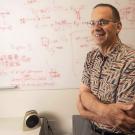
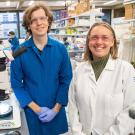
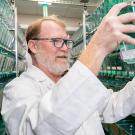
Plants do that through photoreceptors, which are a major focus of research for John Clark Lagarias, a distinguished professor emeritus of molecular and cellular biology.
Photoreceptors have important uses, like measuring the length of the day; plants can tell when seasons change because the days get longer or shorter.
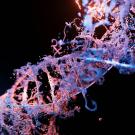
For many, mathematics exists solely within the confines of a blackboard, a calculator or a textbook. But ask Javier Arsuaga and he’ll tell you that mathematics exists within us, right down to our DNA.
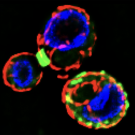
A chance observation in an undergraduate laboratory class has shed light on a key cleaning and recycling process carried out by all eukaryotic cells. Autophagy breaks down organelles, proteins and other molecules so their components can be reused and plays a protective role in preventing disease. However, when autophagy doesn’t work correctly, it’s associated with cancer and neurodegenerative diseases including Alzheimer’s. Previous research has uncovered how cells activate autophagy, but little is known about how it is switched off.
Distinguished Professor Walter Leal has made history as the first UC Davis faculty member to be honored by the Academic Senate with all three of its awards, which celebrate outstanding teaching, public service and research.
In 2020, the Academic Senate awarded Leal the Distinguished Teaching Award for undergraduate teaching, and in 2022 Distinguished Scholarly Public Service Award. Known internationally for his groundbreaking work in insect olfaction and chemical ecology, Leal's achievements have now earned him the 2024 Faculty Distinguished Research Award.
Ben Cox, a postdoctoral researcher in the lab of Celina Juliano, Department of Molecular and Cellular Biology, studies regeneration in Hydra vulgaris, a small cnidarian organism distantly related to the jellyfish. Cox is especially interested in tissue regeneration after injury and aims to determine how progenitor cells migrate and invade into injured tissues to restore lost cell populations, as well as how the extracellular matrix components are remodeled during this regeneration process.
Celina Juliano, an associate professor of molecular and cellular biology who studies the regenerative capabilities of Hydra vulgaris, a small, freshwater relative of the jellyfish, has been named a UC Davis Chancellor's Fellow. This year's fellows are experts in everything from linguistics to law, from the economics of climate change to the reliability of software. These nine faculty members — eight associate professors and one professor — are UC Davis’ newest class of Chancellor’s Fellows, a title given to early career academics doing exemplary work.
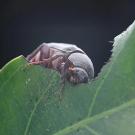
Life on Earth runs on a 24-hour cycle as the planet turns. Animals and plants have built-in circadian clocks that synchronize metabolism and behavior to this daily cycle. But one beetle is out of sync with the rest of nature.
Ben Cox and Rebecca McGillivary, postdoctoral researchers in the Department of Molecular and Cellular Biology, are among 10 early career scientists selected to receive 2022 Hartwell Biomedical Research Fellowships, which were announced in August, 2023.
The Hartwell Foundation, which supports innovative and cutting-edge biomedical research that may benefit children, provides fellows with $100,000 in funding, split between two years.
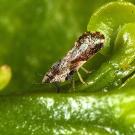
A failed field test has led to a major discovery about the Asian citrus psyllid, the insect that spreads the devastating citrus greening disease. According to new research, the bacteria that cause citrus greening can interfere with the insect’s sense of smell, rendering some kinds of insect traps useless. The work is currently available as a preprint.
Female zebrafish (Danio rerio) have an unusual tendency: if their egg cells are damaged, they can turn into males. Bruce Draper, a professor in the Department of Molecular and Cellular Biology (MCB) and Florence Marlow, a professor at the Icahn School of Medicine at Mount Sinai, have discovered that immune cells called macrophages play a key role in this process. These cells normally keep things “tidy” by removing dead or damaged cells – but in zebrafish they can also remodel the ovaries into sperm-producing testes. “It’s a pretty interesting and novel idea,” says Draper.