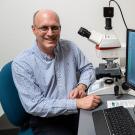
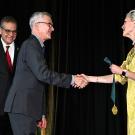
Dan Starr, a cell biologist and professor in the Department of Molecular and Cellular Biology, has been named the new Associate Dean of Research for the College of Biological Sciences. He will step into the role on October 1, 2023.
“I see this position as an opportunity to encourage my colleagues to branch out and expand into new research areas,” said Starr. “Our research portfolio at CBS is already very strong. My goal is to build on our successes and to support future growth in our research programs.”
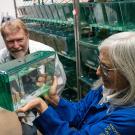
Birth defects related to chromosomal abnormalities often stem from exposure to chemicals early in the mother’s life. But determining which chemicals are at fault poses a serious challenge — akin to solving a hit-and-run case, decades after the fact. Two College of Biological Sciences researchers are developing a method that could identify harmful chemicals far more quickly, with the help of red- and green-glowing zebrafish.
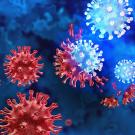
An artificial intelligence model has successfully identified coronaviruses capable of infecting humans, out of the thousands of viruses that circulate in wild animals. The model, developed by a team of biologists, mathematicians and physicists at the University of California, Davis, could be used in surveillance for new pandemic threats. The work was published June 8 in Scientific Reports.
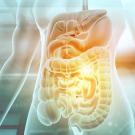
Using a specially designed capsule, researchers can now voyage through the digestive system, collecting new data about digestion and microorganisms. The work by a team including researchers at the University of California, Davis, Stanford University and Envivo Bio Inc., is published May 10 in papers in Nature and Nature Metabolism.
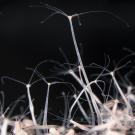
The Greek hero Heracles fought a monster called the Hydra, which grew two new heads for each one he lopped off. Heracles was lucky he wasn’t fighting something with the regenerative ability of the real Hydra, which can re-grow its entire body from a few hundred cells. This simple water animal is helping scientists explore how some animals can regrow missing body parts.
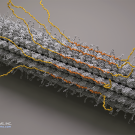
Back-to-back papers in the Dec. 29 issue of Nature Plants report the first complete protein structures for plant respiratory supercomplex I+III₂. Obtaining these structures helps researchers understand basic plant biology, as well as stress responses and how biofuel crops might grow more rapidly.
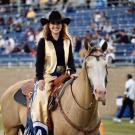
When McKensey Middleton holds horse reins, every slight movement conveys something. Where she places the reins on the horse’s neck gives the horse direction, a path; a tug on them signals for the horse to stop or slow down.
“When you watch a rider, you’re really watching them communicate with the horse,” said Middleton, ’22 B.S. Biochemistry and Molecular Biology. “Your legs, your voice, your hands, you’re using these things to communicate with the horse.”
In Alzheimer’s disease and other neurodegenerative dementias, proteins that normally play a role in healthy brain tissue turn bad, clumping together to form insoluble plaques and tangles as neurons wither and die. Exactly how these proteins are connected to disease — and whether they can be targeted in some way to slow, stop or reverse its progression — remains a challenging problem.
Distinguished Professor Walter Leal of the Department of Molecular and Cellular Biology, and a former chair of the Department of Entomology, was inducted as a Fellow of the National Academy of Inventors (NAI) at a June ‘22 ceremony in Phoenix, Ariz.
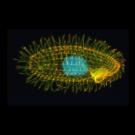
Tetrahymena, a tiny single celled-organism, turns out to be hiding a surprising secret: it’s doing respiration – using oxygen to generate cellular energy – differently from other organisms such as plants, animals or yeasts. The discovery, published March 31 in Science, highlights the power of new techniques in structural biology and reveals gaps in our knowledge of a major branch of the tree of life.