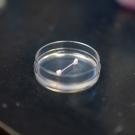
What makes the human brain distinctive? A new study published July 21 in Cell identifies two genes linked to human brain features and provides a road map to discover many more. The research could lead to insights into the functioning and evolution of the human brain, as well as the roots of language disorders and autism.
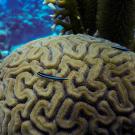
Where do you go when you’re a fish and you need a skincare treatment? Coral reefs contain natural “beauty salons,” lively social hubs of activity where fish “clients” swim up and wait to be serviced by smaller fish cleaners. The little cleaners dart under and around their much bigger clients — even entering their mouths — cleaning their scales of bacteria and parasites like a team of car washers servicing a Buick. Sometimes cleaners even rub against their clients, providing a soothing massage.
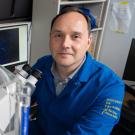
Neil Hunter, a professor in the Department of Microbiology and Molecular Genetics and an Investigator with the Howard Hughes Medical Institute, has been elected as a Fellow of The Royal Society in London.
This prestigious appointment, announced May 20, was offered to only 70 scientists across the world.
“I’m thrilled and surprised,” said Hunter. “The acknowledgment means a great deal to me, because it’s an election by some of the best scientists in the world.”
When drug breakthroughs happen, the medical community rejoices. But some people can be left behind. Case in point: Rapamycin. Now a UC Davis professor is investigating how to bring back the benefits of a revolutionary drug to the people who were there from the beginning.
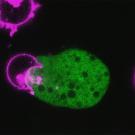
The single-celled parasite Entamoeba histolytica infects 50 million people each year, killing nearly 70,000. Usually, this wily, shape-shifting amoeba causes nothing worse than diarrhea. But sometimes it triggers severe, even fatal disease by chewing ulcers in the colon, liquefying parts of the liver and invading the brain and lungs.
A single set of genetic instructions produces thousands of structures in our bodies – from nerve cells that branch like gnarled oak trees, to osteoblast cells that sculpt minerals into bone. It begins with the delicate formation of sperm and eggs – which ignite the miraculous unfurling of an entire body from a single cell.
For this to happen, DNA must be precisely folded and coiled into the sperm and egg cells – creating a structure that coordinates thousands of genes, says Satoshi Namekawa, a professor of microbiology and molecular genetics.
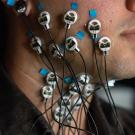
Lee Miller vividly recalls the day in 2021 when he met a woman who had lost the function of her vocal cords. In hoarse, whispering tones she explained how her voice had been instrumental to her vocation. Losing it, she said, undercut her life’s purpose. He had to listen carefully to hear her faint words, but the lesson “was really powerful.”
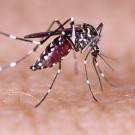
The mosquito-borne Zika virus is known for causing microcephaly, a birth defect in which abnormal brain development results in a smaller-than-expected head. A new study published Jan. 13 in mBio shows that the Zika virus hijacks a host protein called ANKLE2, which happens to be important for brain development, to assist its own reproduction. Because Zika, unlike most related viruses, can cross the placenta, this can have disastrous consequences in pregnancy.
The genetics behind the alternating sexes of walnut trees has been revealed by biologists at the University of California, Davis. The research, published Jan. 3 in Science, reveals a mechanism that has been stable in walnuts and their ancestors going back 40 million years — and which has some parallels to sex determination in humans and other animals.