There are many ways to communicate with prospective romantic partners: If you are a Japanese scarab beetle, it’s a matter of distinguishing left from right. New work from U.S. and Chinese scientists, published this week in Proceedings of the National Academy of Sciences, shows how these beetles use mirror-image pheromones to find a mate. The work could lead to better monitoring and control of significant agricultural pests.
Venkatesan Sundaresan, a Distinguished Professor of plant biology and plant sciences at the University of California, Davis, has been awarded a Gates Foundation grant to develop self-cloning crops for Indian farmers.
Coral reefs make up less than 1% of ocean habitat but are home to at least 25% of marine species. These incredibly biodiverse ecosystems are increasingly threatened by human actions, including anthropogenic climate change.
Two researchers at the University of California, Davis have been awarded a VinFuture Prize in recognition of their work developing self-cloning crops, a breakthrough for sustainable agriculture.
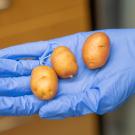
Mutations drive evolution, but they can also be risky. New research led by plant biologists at the University of California, Davis, published Nov. 10 in Proceedings of the National Academy of Sciences, reveals how plants control mutation rates in different stem cells to balance adaptability with safety and stability. The findings have implications for breeding some of the world’s most important fruit and vegetable crops, such as potatoes and bananas.
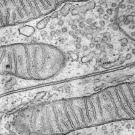
Inside our cells are tiny engines that supply the energy to sustain life. These protein machines essentially burn our food – producing CO2 and harnessing the energy that is released to sustain growth, movement and even thought.
Each year, roughly 1.6 million people worldwide are born with genetic diseases that disrupt these tiny cellular engines – making life difficult.
“Mutations in these protein complexes are really devastating, and often lethal,” says James Letts, an associate professor of molecular and cellular biology.
A new study by the University of California, Davis, shows how cells work together to avoid a sudden drop in blood sugar. Understanding these feedback loops could improve the lives of people with diabetes and help them avoid dangerous hypoglycemia.
The work was published Sept. 16 in Proceedings of the National Academy of Sciences.
When a woman becomes pregnant, the outcome of that pregnancy depends on many things — including a crucial event that happened while she was still growing inside her own mother’s womb. It depends on the quality of the egg cells that were already forming inside her fetal ovaries. The DNA-containing chromosomes in those cells must be cut, spliced and sorted perfectly. In males, the same process produces sperm in the testes but occurs only after puberty.
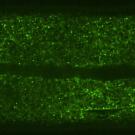
In a new study published in Science Advances on September 10, a team of UC Davis researchers tracked the movement of fluorescent particles inside the cells of microscopic worms, providing unprecedented insights into cellular crowding in a multicellular animal. They found that the cytoplasm inside the worms was significantly more crowded and compartmentalized than in single-celled yeast or mammalian tissue culture cells, which are more commonly used to gauge internal cellular dynamics.
The mind of a fruit fly encompasses 125,000 nerve cells, squeezed into the space of a poppy seed. At first glance, the fly brain looks nothing like a human brain. But many of the underlying neural circuits are surprisingly similar.
Fumika Hamada, a professor of neurobiology, physiology, and behavior, is using fruit flies to study a critical but oft-overlooked brain function: the regulation of our body temperature in a consistent daily rhythm.